
How I Find Designer Pieces in Sweden Without Paying Designer Prices!
Scoutat-artiklarna publiceras på engelska just nu.
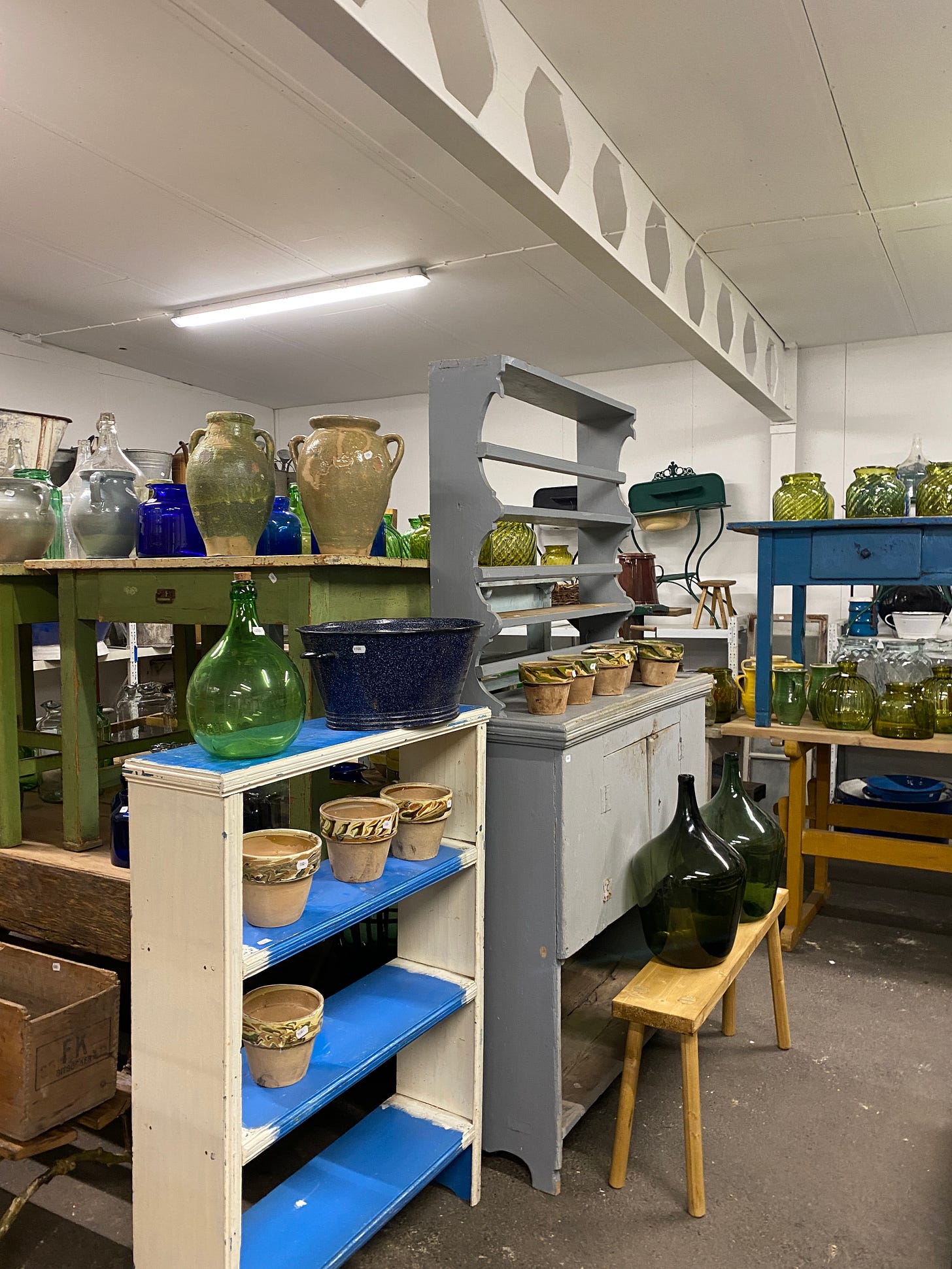
Second - hand store “Fyndboa” in Kristinehamn
This article will be a flowy, practical guide to finding second-hand stores that are actually worth your time (and your client’s budget): where I look, what I ignore, and the 10-minute in-store test that tells me if a place has good stock systems.
As I was looking at my storage the other day and enlisting myself to be a seller at one of the most visited flea markets in Värmland, where I am based in Sweden. I realised that this is exact the time to go vintage sourcing yourself. Getting rid of the things you no longer find useful or needed, are the best way to start thinking about everything you do need for your lifestyle today. And this where second-hand finds could be source of greatness or a big flopp!
If you’ve made it here and you’re reading this, let’s make it worth your time so your finds don’t fall flat, but turn into vintage pieces you’ll cherish for years to come.
Google is for coordinates. Not for taste.
I use Google to find opening hours and locations. That’s it.
If you search “second hand Värmland” you’ll get lists, sure but lists don’t tell you the only thing that matters: does this place actually move stock? Or is it just the same dusty shelf with the same sad frames, priced like they’re doing you a favour?
What I trust more:
- local Facebook groups (the ones that look messy and very un-designed)
- small Instagram accounts that post new arrivals like it’s normal
- word of mouth from one person who always finds good things
If you want a starting map in this region, Visit Värmland’s second-hand list and the Örebro visitor guides can help you discover names but I treat them like a directory, not a guarantee.
My 10-minute “worth it?” test inside a shop
I walk in and I’m not looking for a perfect find. I’m looking for signs the place has a system.
1) Does it feel like things move?
A “new in” area, fresh tags, staff who casually mention restock days. Movement is everything.
2) Do they price like adults?
I can handle expensive. I can’t handle random. If a cracked vase costs the same as a solid wood table, I already know I’m not sourcing here I’m just browsing.
3) Are they honest about condition?
I love patina. I’m not precious. But I want the truth. If flaws are hidden until you’re already attached, it’s not a shop it’s a little emotional trap.
4) Do they have anchors, or only accessories?
This is a big one for client work. I don’t need another tiny bowl. I need pieces that hold a room:
- mirrors with weight
- lamps that make evening light soft
- side tables with real proportions
- chairs with a strong silhouette
- art that isn’t screaming, just present
If a shop has anchors regularly, it means their intake is good and that’s what you’re really hunting.
How I’d source locally
If I were doing this here, I’d split it into three lanes:
Lane 1: Big second-hand stores (high volume, frequent turnover)
Great for: frames, lamps, small furniture, surprise wins. Not glamorous, but the rotation can be very good if you go often.
Lane 2: Loppis + community groups (the real intel)
This is where you learn the “when.” And the “when” is often more important than the “where.”
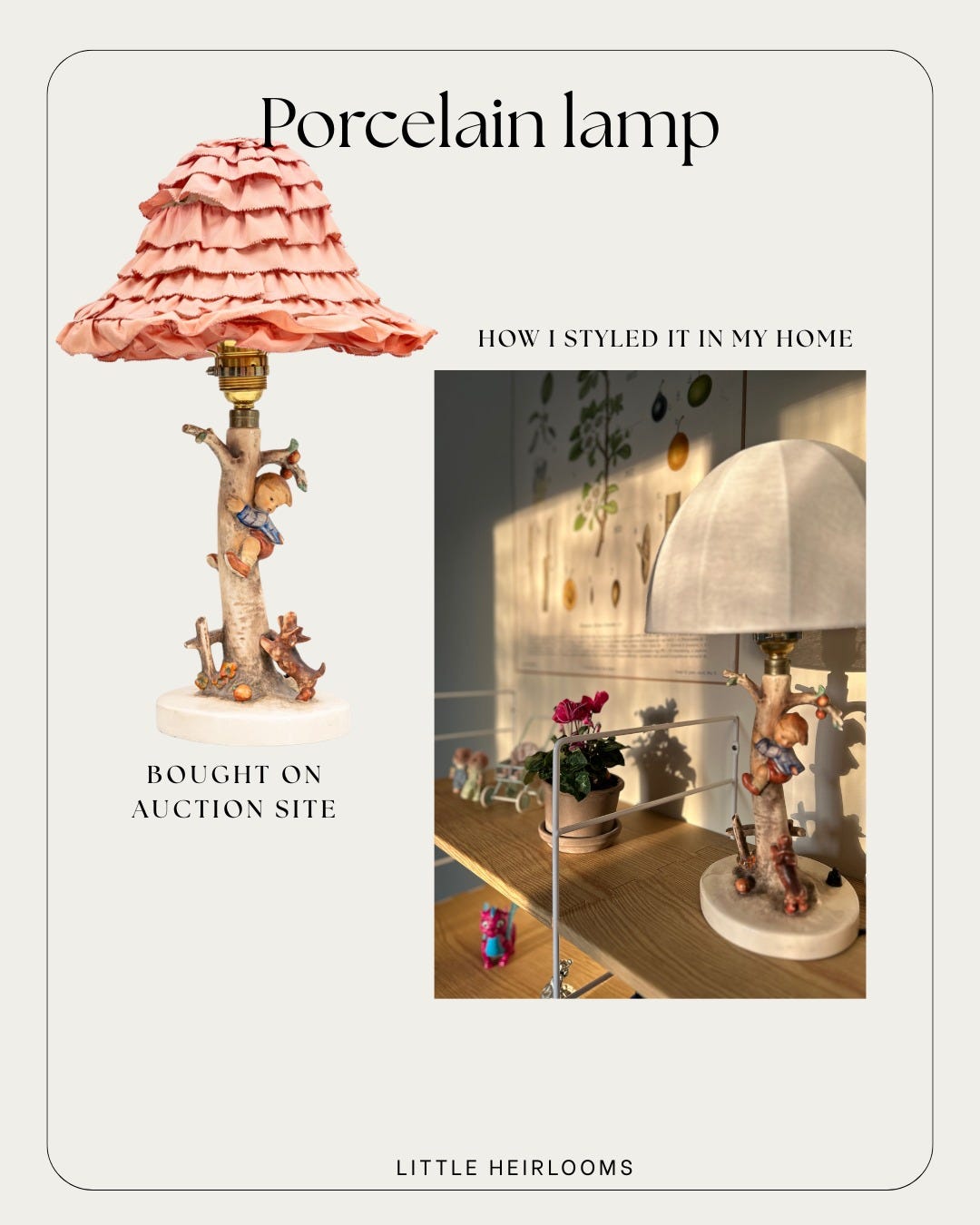
Lane 3: Auctions (when you want value that holds up for clients)
If you need pieces with presence wood, ceramics, lighting, proper vintage auctions can be calmer and more rational than boutique pricing. You’re not paying for styling. You’re paying for the object.
My rule (for me and for clients)
I don’t buy maybes.
Not because I’m disciplined. Because I’ve learned the hard way: a “maybe” becomes clutter really fast. And clutter is expensive it costs space, attention, and the feeling you were trying to create in the first place.
So I buy the pieces that are a clear yes: the ones that instantly make a room feel more grounded, more lived-in, more like someone paid attention.
And if I leave empty-handed? That’s fine. That’s still good sourcing.
What’s the one category you always wish you could find second-hand lamps, mirrors, chairs, art but it never shows up when you need it?